Diese externen Links werden in einem neuen Fenster geöffnet
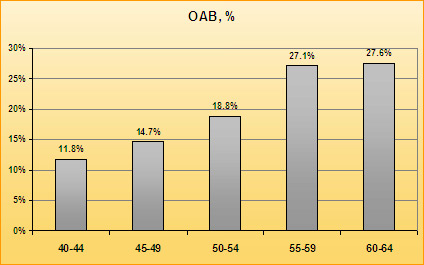
4. Source: Irwin, D., Milsom, I. et al. Impact of overactive bladder symptoms on employment, social inteactions and emotional wellbeing in six European countries. British Journal of Urology International: 2005; 97, 96-100. http://www.blackwell-synergy.com/doi/pdf/10.1111/j.1464-410X.2005.05889.x (Subscription required. Geöffnet 13.12.2006)
5. Royal College of Physicians. Inadequate and Incomplete ? Continence Care in the UK. Press release 23.11.2005
http://www.rcplondon.ac.uk (Geöffnet 10.10.2006) (
http://www.rcplondon.ac.uk/news/news.asp?PR_id=290). Denis, L. et al. Continence Promotion: Prevention, Education and Organisation. Abrams, et al (eds) Third International Consultation on Incontinence 2004: Monaco; vol 1, p38.
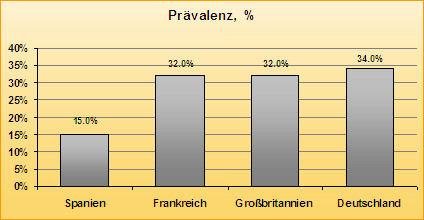
6. Hunskaar, S., Lose, et al. (2003) Prevalence of Stress Urinary Incontinence in Women in Four European Countries, 2002. ICS: UK. Link to PDF: http://www.icsoffice.org/publications/2002/pdf/257.pdf (Geöffnet 28.11.2006)
8. National Women's Health Information Center (NWHIC), Office on Women's Health, US Department of Health and Human Services.
http://4women.gov/faq/intcyst.htm (Geöffnet 10.10.2006)
9. International Foundation for Functional Gastrointestinal Disorders. IBS in the Real World. IBS Research Findings by IFFGD. August 2002. (Geöffnet 12.10.2006.)
10. Denis, L. et al. Continence Promotion: Prevention, Education and Organisation. Abrams, et al (eds) Third International Consultation on Incontinence 2004: Monaco; vol 1, p43.